
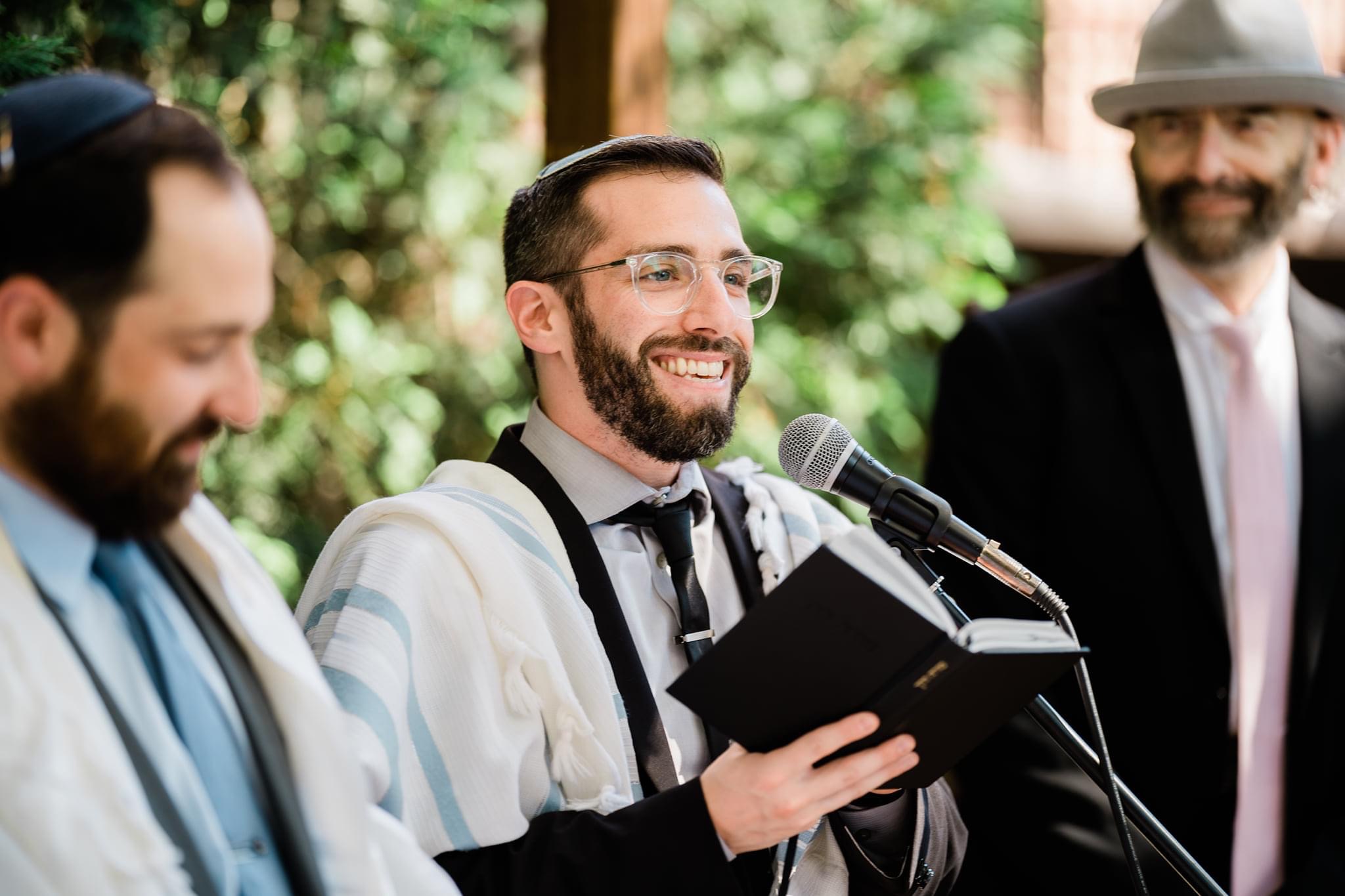
When you’re in the thick of a fertility journey, it can be hard to know what to say, even to God.
Rabbi Sam Blustin has been there. After walking his own fertility journey alongside his wife, he turned to the texts and melodies of Jewish tradition to find grounding, hope, and something to hold onto. Now he’s sharing five prayers that carried him through, from Hannah’s raw cry in the Temple to the quiet breath of a name for God that needs no words at all. Whether you have a formal prayer practice or have never set foot in a synagogue, these texts offer something real for wherever you are on your journey.
____________________________________________________________________________________________
Five Prayers To Support Your Fertility Journey
Written by Rabbi Sam Blustin
When struggling to have a child, walking through the world can feel tenuous emotionally. A post on Instagram, a child in synagogue, or an innocuous attempt to make small talk can set off an avalanche of emotion. Each month, we may go through a cycle of hope, anxiety, disappointment, and grief, if we allow ourselves to feel at all. Prayer, like many forms of ritual, can help ground us through these ups and downs. It can help us contextualize our journey, and it can help motivate us where we have control, and give over that which we don’t have control of.
My wife teaches, in the name of her Rabbi, David Kasher, that prayer can be a way of doing something and nothing at the same time. While it may or may not actually affect the circumstances of our world, our spiritual connection can serve as a grounding and uplifting force that helps us keep putting one step in front of the next.
Along my own fertility journey, I’ve found much comfort and hope in the texts of our daily prayers and some of our most sacred scripture. In the hopes that you might find some comfort too, here are five texts (and some melodies) that have been particularly meaningful to me as of late, as well as an additional resource for those who might have the added pain of loss:
- The Amidah – Imahot and Ufoked Sarah
The Amidah, our most central prayer, begins by invoking our Patriarchs and Matriarchs, who set the stage for our sacred story as a people (liberal Jewish communities have added the Matriarchs to this traditionally Patriarchal prayer). There are two elements of this first blessing where I find deep meaning:
| אֱלֹהֵי שָׂרָה, אֱלֹהֵי רִבְקָה, אֱלֹהֵי רָחֵל, וֵאלֹהֵי לֵאָה:
מוֹנֶה מִסְפָּר לַכּוֹכָבִים, לְכֻלָּם שֵׁמוֹת יִקְרָא: |
Harofeh lishvurei lev, um’chabesh l’atzvotam:
Elohei Sarah, Elohei Rivka, Elohei Rachel, v’Elohei Le’ah |
| God of Sarah, God of Rebecca, God of Rachel, and God of Leah | |
Our matriarchs, overwhelmingly, struggled with infertility. Each dealt with it in different ways – Sarah laughed, Rebecca prayed, Rachel named – however, our legacy is not one of smooth fertility journeys, but one of deep pain and wrestling with God. When we invoke each of these Matriarchs and remember their individual relationships with God, we might find some solace and hope in knowing that God is with us too in our journey.
וּפוֹקֵד שָׂרָה
U’foked Sarah
God heeded (remembered) Sarah’s prayers
This phrase is appended to the end of the first blessing of the Amidah, right after we bless God as a shield to Abraham in a time of danger. In Reform communities, the word ‘ufoked’ is sometimes replaced by the word “v’ezrat”, helper [of Sarah]. ‘The One who remembered Sarah’, however, comes with deep biblical roots (Gen. 21:1) – it’s the word the Torah uses when God finally blesses Sarah with a child. My wife, in reflecting on these words, also noted how “remembering” felt so much more uplifting than “helping”. Helping denotes that God was there helping out. Remembering shows us that even when her fertility came much later than hoped, even in her old age, even when it seemed like God had forgotten – God remembered her promise and granted Sarah a child.
Traditional communities don’t add the words ‘ufoked Sarah’, as they’re reluctant to add or subtract words from longstanding blessings. While I too used to be reluctant to add these words, in our fertility journey, I’ve found in these words an important and unique hook to put my own prayers on. Just as God heeds Sarah in her old age and grants her a child, so too might God heed our own prayers.
- Hannah’s Prayer – I Samuel 1:11
The book of Samuel begins with Hannah, the more beloved wife of Elkanah, being bullied by his other wife for her inability to have a child. Alone, she goes to the nearby Temple and offers this heartfelt prayer to have a son:
| וַתֹּאמַר: ה’ צְבָאוֹת אִם־רָאֹה תִרְאֶה בׇּעֳנִי אֲמָתֶךָ וּזְכַרְתַּנִי וְלֹא־תִשְׁכַּח אֶת־אֲמָתֶךָ וְנָתַתָּה לַאֲמָתְךָ זֶרַע אֲנָשִׁים
מוֹנֶה מִסְפָּר לַכּוֹכָבִים, לְכֻלָּם שֵׁמוֹת יִקְרָא: |
Harofeh lishvurei lev, um’chabesh l’atzvotam:
Vatomar: Adonai T’zevaot, im ra’oh tireh ba’ani amatecha, uz’chartani v’lo-tishkach et-amatecha, v’natatah la’amat’cha zera anashim… |
| “And she said: “Lord of Hosts— truly see me in my pain, remember me and not lose sight of me, place into my life the gift of a child.” | |
Hannah’s prayer, with the help of Eli the Priest, does end up being heeded. She has a son, Samuel, who becomes a great prophet. The text says that his name means “I asked God for him.”
On their own, these words are a heartfelt prayer that we might take as our own prayer along our fertility journey. This prayer expresses the deep pain and longing for something that we don’t yet have, asking God to remember us and heed our prayer. Check out the melody I wrote below to these words:
While these words are not included in our formal liturgy, the style of her prayer becomes paradigmatic in rabbinic law of how we should pray the Amidah prayer, the prayer where we stand face to face with the Divine. From this woman suffering the pain of infertility, we learn how we should all pray.
Hannah also invents a new name for the Divine – Adonai Tzeva’ot, Lord of Hosts. Never before had God been described or called in this way, but out of her desperation for a child, she invokes a new name that is a prayer in of itself. By praying to Adonai Tzevaot, her implicit prayer says “God – you’ve created so many beings in the universe – stars, plants, humans. Couldn’t you create just one more for me?” This name does get included in our liturgy, in the introductory paragraph of the Havadallah prayer and in the liturgy leading into the early morning Ashrei, amongst other places. We might offer this as our own prayer as well.
- Harofeh – Psalm 147:3-4
| הָרוֹפֵא לִשְׁבוּרֵי לֵב, וּמְחַבֵּשׁ לְעַצְּבוֹתָם:
מוֹנֶה מִסְפָּר לַכּוֹכָבִים, לְכֻלָּם שֵׁמוֹת יִקְרָא: |
Harofeh lishvurei lev, um’chabesh l’atzvotam:
Moneh mispar lakochavim, l’chulam shemot yikra: |
| Adonai heals the brokenhearted, binds up their wounds,
And numbers the stars, giving each a name. |
|
These two lines of Psalm 147, taken one after another, hold immense power. We might be tempted to think that we’re insignificant, not worthy of God’s, or other people’s, love, care, affection, or presence. This prayer reminds us of the opposite – if God can count the stars and give each of them a name, surely God cares and can heal and mend our broken hearts as well. By offering this prayer (listen below), we pray that our hearts might be open to the possibilities in front of us, and that we feel a sense of wholeness in what is, even as we long for that which we might want.
- Hamechadesh B’tuvo – from the Weekday Morning Shacharit Service
Fertility journeys are wearying – emotionally, spiritually, and physically. What sources might we find to maintain the hope and energy to keep trying?
| בְּכָל יוֹם, בְּכָל יוֹם, בְּכָל יוֹם תָּמִיד
בְּכָל יוֹם מַעֲשה בְּרֵאשִׁית. וּבְטוּבוֹ מְחַדֵּשׁ בְּכָל יוֹם תָּמִיד מַעֲשה בְּרֵאשִׁית: |
B’chol yom, b’chol yom, b’chol yom tamid
B’chol yom ma’aseh b’reishit. Uv’tuvo m’chadesh b’chol yom tamid ma’aseh b’reishit: |
| In Your goodness, every day You renew creation. | |
This prayer, offered weekdays after our call to prayer (the Barechu), reminds us that each day is created anew, with new and fresh opportunities. What was yesterday may not have worked, but today is a new cycle, a new treatment, a new chance that God might help us join her in the continual creation of the world. Listen to the song here:
- Min Hameitzar – Psalm 118:5
One of our ultimate prayers of longing, Min Hameitzar is the song of praise of one who calls out to God in a time of need, and is answered with expansiveness.
| מִן־הַמֵּצַר קָרָאתִי יָּהּ, יָּהּ.
עָנָנִי בַמֶּרְחָב יָהּ׃ |
Min Hameitzar karati Yah, Yah.
Anani vamerchav Yah. |
| From a place of narrowness, I called out to You, Ya.
I was answered with the expansiveness of Ya. |
|
This language evokes the imagery of the Exodus, as the word metzarim, straights, shares the same letters as the Hebrew word for Egypt. Just as our people called out in their pain, and were redeemed through the crossing of the narrow waters of the parted sea, we pray that we too might be led through these narrow straights to a place of more expansiveness.
In the above melody for this sacred prayer (of which there are many), I emphasize the very act of calling out to God through the partial proper name for God, ‘Ya’ (half of the tetragrameton, YHVH). This name, ‘Ya’, is just breath. Its use here suggests that, even when we don’t have words or they feel too overwhelming, just the act of calling out, the very act of a deep exhale even, can constitute its own prayer to be met, held, and hopefully answered by the expansiveness of the universe.
Additional Prayers Around Loss and Fertility
Loss is, unfortunately, a part of many fertility journeys, and so I wanted to include something that emerges specifically from that pain here. After two failed rounds of IVF, Rabbi Ilan Glazer recalls how overjoyed he and his wife were when they became pregnant on their third attempt. After nine months, their son, Shemaryah, was stillborn. Out of that journey of loss, Ilan wrote and recorded an album of songs he titled “Gam Ki Elech: Turning Our Sorrows Into Songs”, in which he does just that. While they would eventually bring another son into the world, this album represents his own attempts to metabolize his sorrow into song. As they write in the album description, “Sherri and I hope that this album will bring comfort and healing to all who experience sadness and hard times. We hope that these melodies will give voice to the tears, the sadness, the pain that grief and heartbreak brings. We hope that it will serve as a reminder that even in the depths of despair, God’s healing presence can still be found. We hope that all of us who mourn can find ways to turn our sorrows into song.”
Like Ilan, I hope that these texts and melodies, whether part of a traditional prayer practice or a ritual of your own making, might provide some measure of comfort, and maybe even hope, wherever you might be on your fertility journey.
Download a PDF of these prayers here.
____________________________________________________________________________________________
Sam Blustin is a rabbi, ritualist, and musician, focused on creating meaningful connection through intentional gathering. A songleader by training, he approaches prayer and music as a collective endeavour which helps us come closer to ourselves, each other, our tradition, and that which is larger than ourselves. His debut album of liturgical music, called “Come, My Beloved”, can be found wherever you listen to music. Sam is a Rabbi and Director of Prayer and Music at Chizuk Amuno Congregation and Schools in Baltimore, Maryland, where he lives with his wife, Allison, and their adorable terrier, Smoosh.
If you’re somewhere in the middle of your own journey, JFF is here. Financial grants, emotional support, community programming, and one-on-one connection are all available. Visit our website to learn more.
